
Old Queenslander Experience
Since 1999 we have relocated or lifted 75 Old Queenslanders, 37 of them were house lifts. During the building boom period from 2006 to 2009 we carried out 10 relocations and 13 lifts. A large percentage of the 75 projects also involved house extensions.
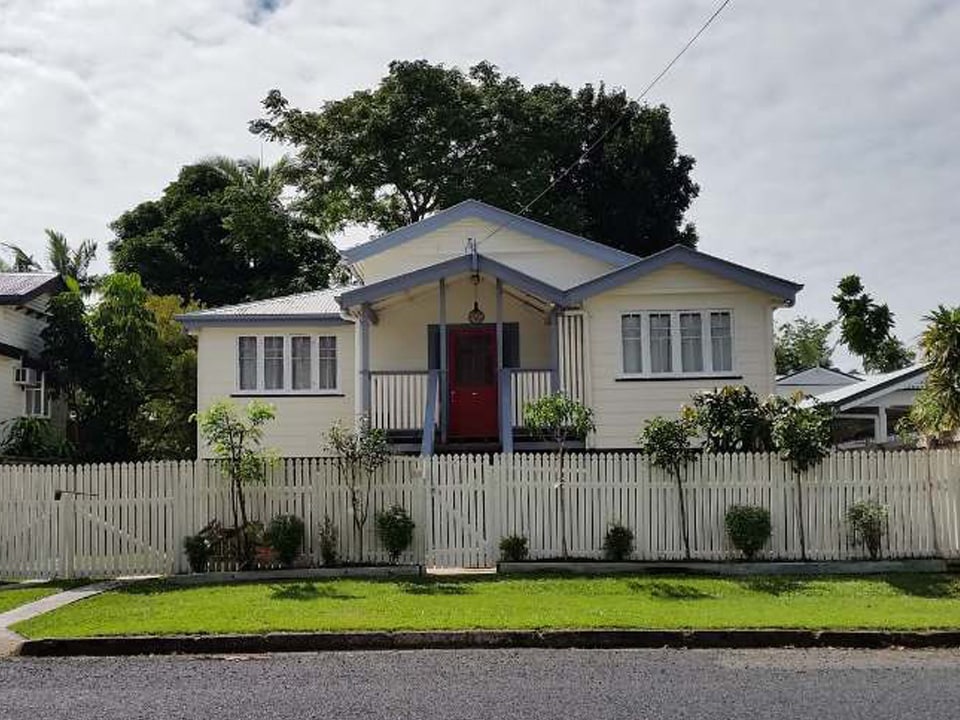
Old timber houses are a reflection of a town’s past. Most of the modern owners of these houses preserve their frontage character and extend out the back, usually just a modest extra room and a covered deck.
The Old Queenslander style timber houses are part of most Queensland towns. They were mostly built in a compact form to suit the conditions of that era. A lot of today’s owners like more floor space in their home for growing families and entertaining so they want to use the under-floor space for more rooms and/or extend the house floor area. No problems, just jack up the house and build rooms under, however, a lot of those old houses were built close to the side property boundary which is still OK but the new rooms to be built under must be setback from the boundary to conform with current setback requirements. This will introduce structural issues with the step in the external walls and support for the upstairs floor which we will resolve. Another issue to deal with are the existing supporting posts. They are usually spaced at about 1.8m to 2.7m centres. To create new rooms under the house some of the posts need to be removed and the floor supported by beams fixed to the floor bearers.
Lifting & Framing Challenges
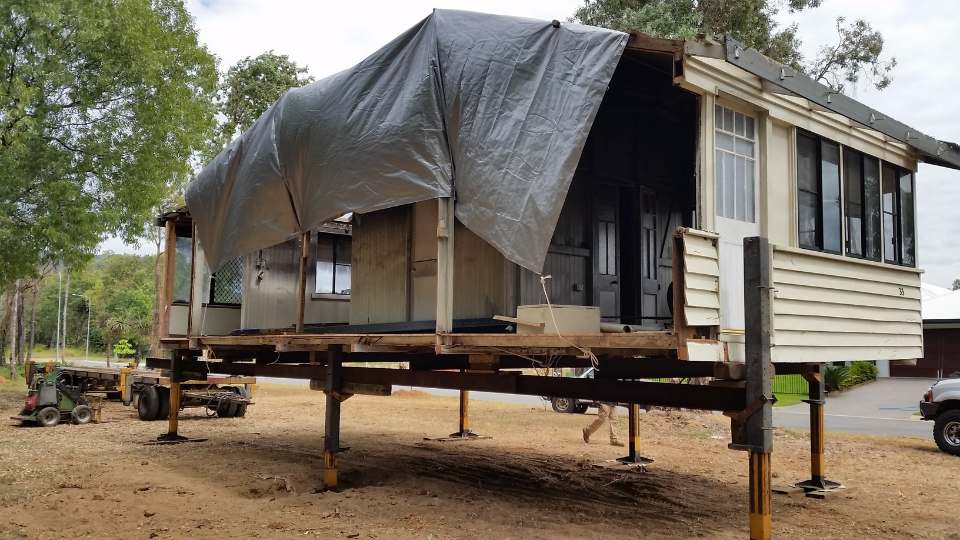
From past experience lifting and building rooms under Old Queenslanders can be a challenge. The ground level supporting posts are at a close spacing of 1.8m to 2.7m. Removing existing ground level floor support posts for these new rooms and installing beams to support the floor above can be tricky without having the new floor beams to support the existing bearers projecting through the new downstairs ceiling. By reinforcing the existing main floor bearers some posts can be deleted. Once all the existing posts are located and a floor plan created discussions can be had with the client to identify posts that can be removed. A few clients have wanted quite large rooms created underneath and were happy with seeing beams come through the ceiling. Another option is to raise the house further and create a thicker floor to ceiling at extra cost. We always identify and discuss the pros and cons for this requested option usually during the initial site visit.
When extending an Old Queenslander, generally the existing wall and roof construction is retained. The old timber houses were originally built using timber rafters in the roof compared with modern day timber trusses. Mostly the rafters had midspan supports that were fixed to the top of an internal wall compared with trusses that are usually only fixed to the external walls. The rafter supports can only be seen from inside the roof space and it is important to identify these supporting walls. These walls can be removed, however, a supporting roof beam needs to be inserted at the location of the old wall.
Adding Stairs
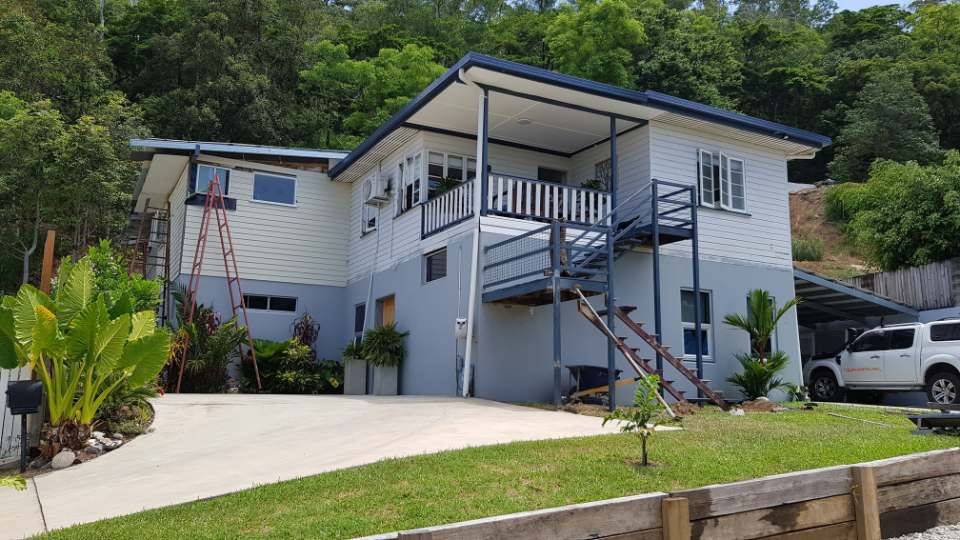
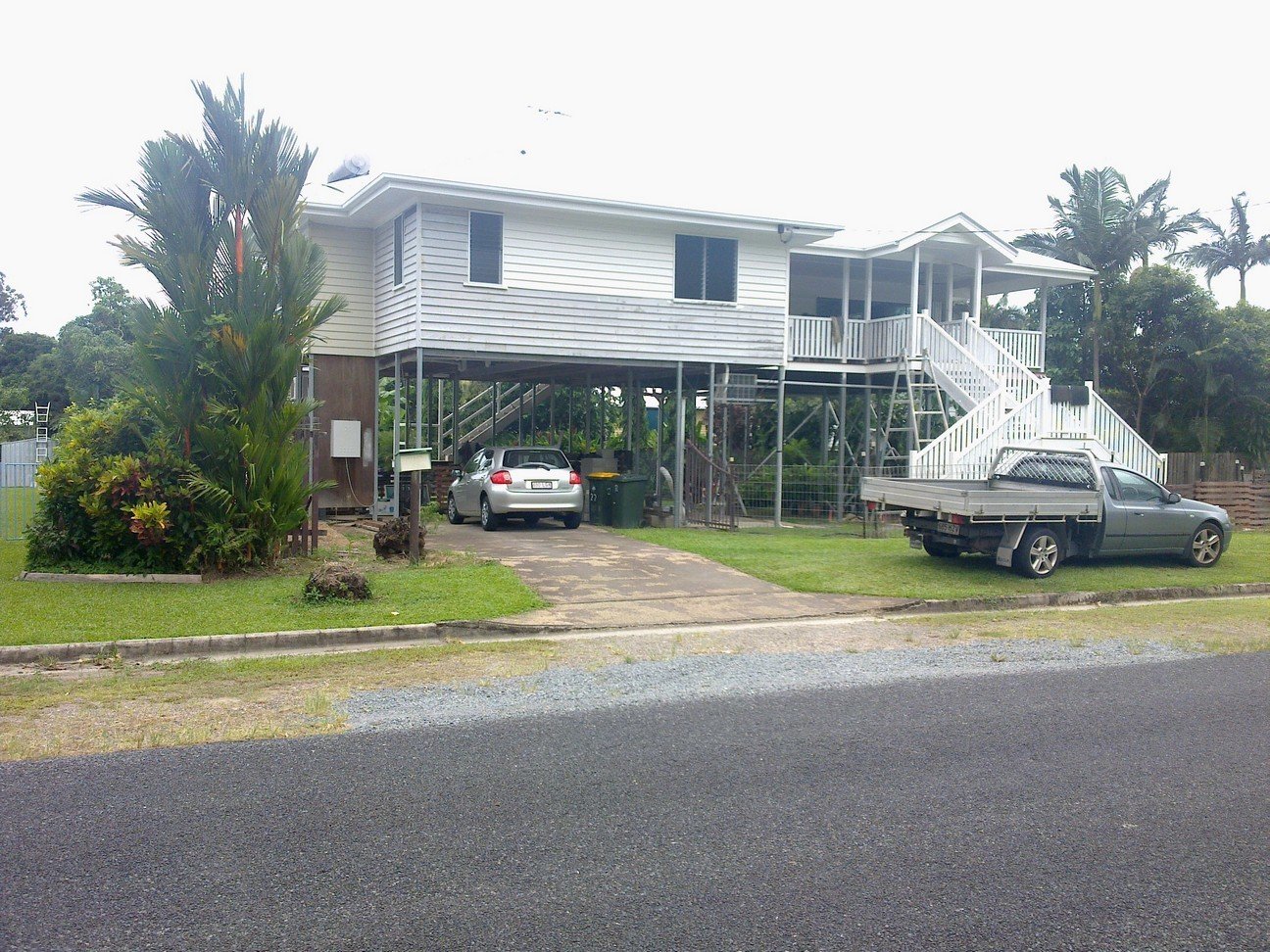
When creating rooms under the next question is how to connect the upper and lower levels. Stairs are the obvious option, however, if the stairs are to be internal they take up a lot of floor space on both levels. A straight flight of stairs takes up about 4.5 metres by 1.2m wide without landings each end. The large majority of past house lifts and relocates have specified a single flight of external stairs. OK if you don’t mind the chance of getting wet when it’s raining. The Australian Standards restricts a set of stairs to 18 risers between floors or landings. This is often an “I didn’t realise that” point in discussions. Stair treads are usually 250mm wide, 1000m long and at 175mm height intervals.
Local Council Rules
Note that in some coastal towns in Far North Queensland such as Cairns the local council sets minimum floor levels for new ground floor habitable structures like houses. This is due to possible rising stormwater levels during intense storm events. Information on the water level major events is available from the local council and your Building Designer will be able to advise further. Council usually sets the minimum floor level at 300mm above the maximum flood height.